extras
have you seen this character?
You might be wondering where you've seen some of these characters from Crazy Cabbie before. The series is full of... very... familiar faces from various video game franchises, each with their own quirks and personalities. This section debunks it all, breaking down the references, inspirations, and not-so-subtle nods behind every unexpected crossover.
otto and his cab
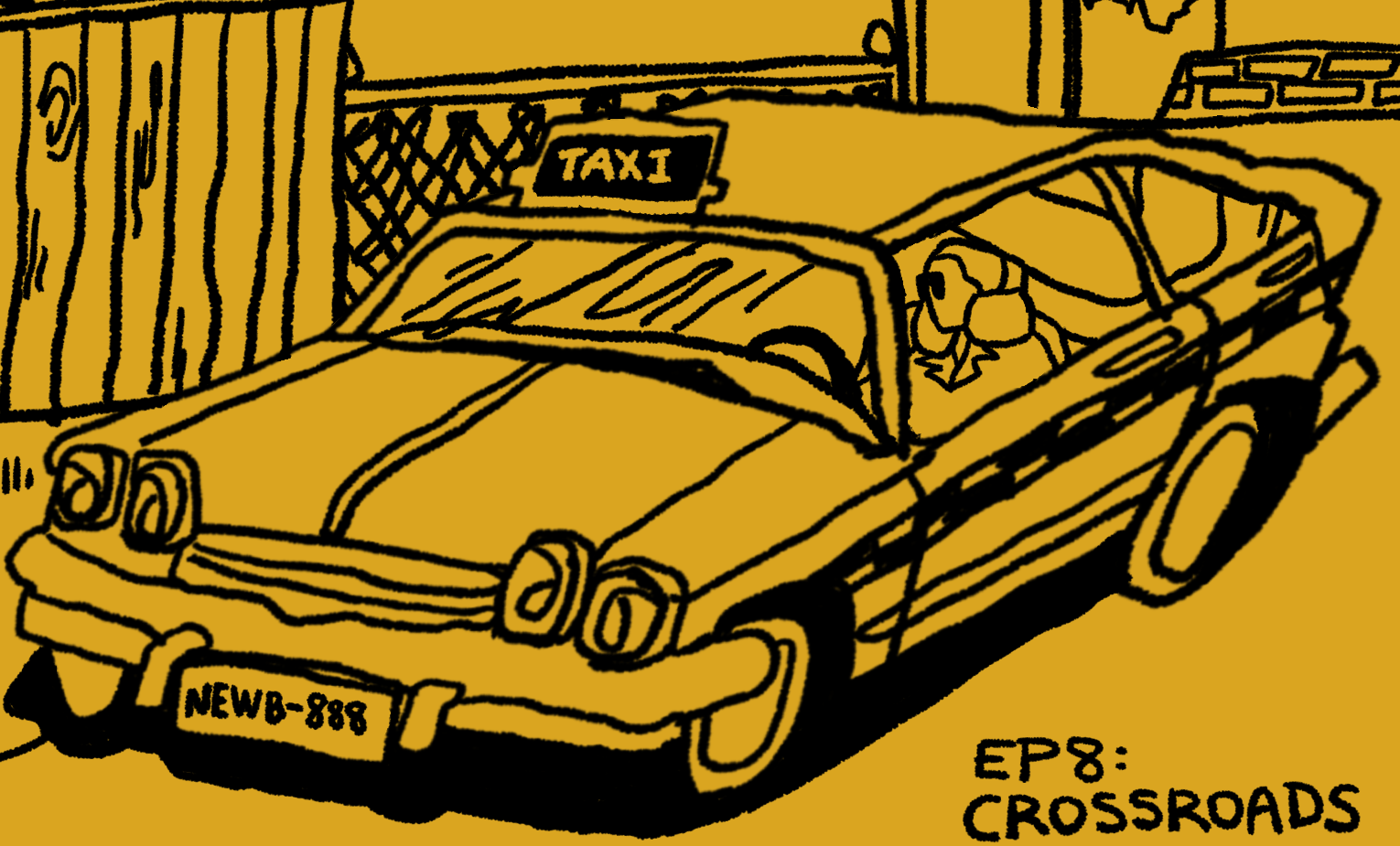
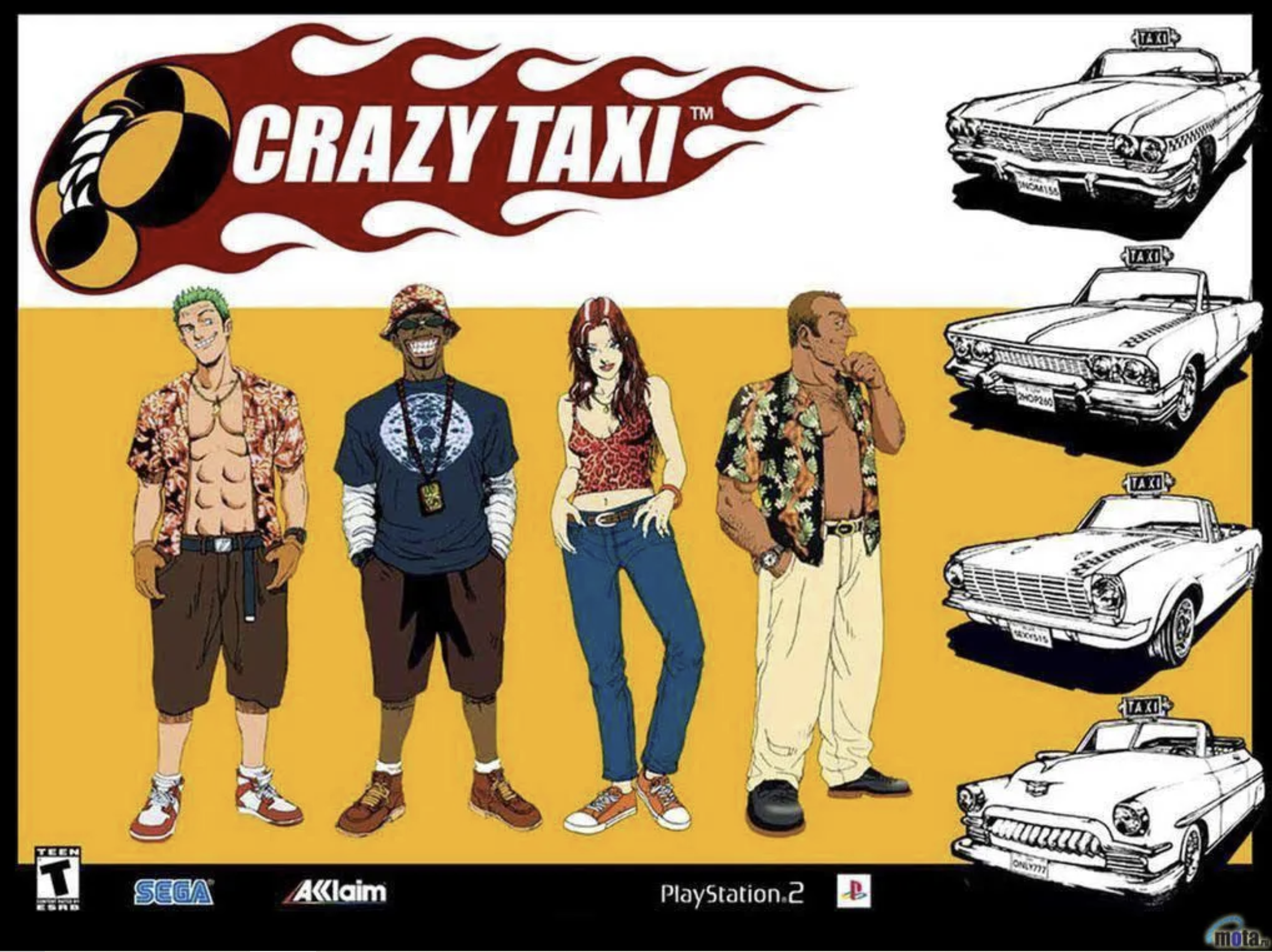
Otto's cab is a direct reference to the iconic taxis from the original Crazy Taxi
games, which are a huge influence on the creation of Crazy Cabbie. The
overall look and functionality of the vehicle are a loving nod to an arcade classic.
Admittedly, Otto's cab could've been a bit shabbier, considering Otto's still a novice
in the crazy cabbie scene. Then again, considering the events of Episode 13, we
both know something about his ride has got to change...
hopper
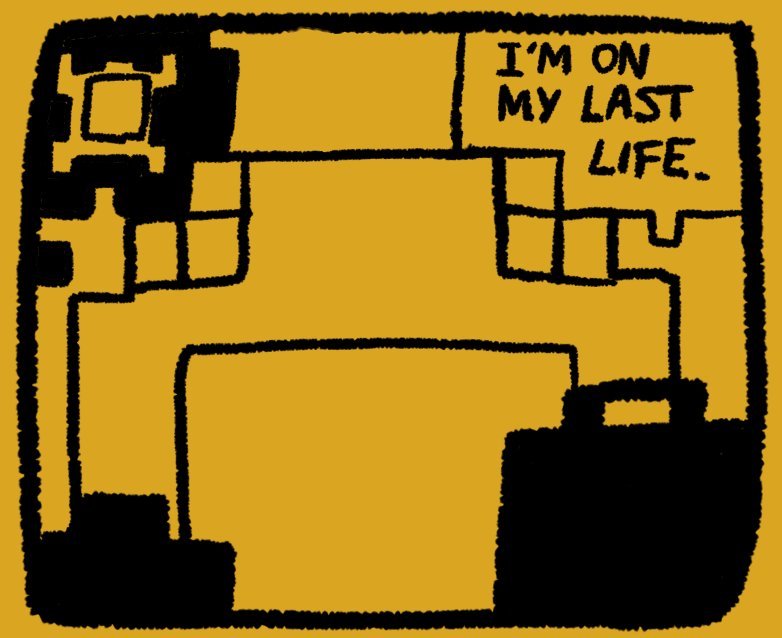
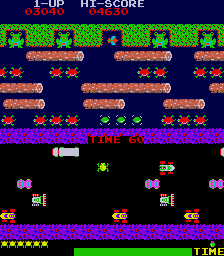
Hopper is based on the iconic Frogger, having leapt free from the confines of 8-bit thinking. As he continues to lose lives, Hopper grows increasingly aware of his bleak situation and of the corporate machine he's trapped in. At heart, he's just a typical salaryman fighting for survival, trying to make it to work every morning without becoming roadkill.
ron noke
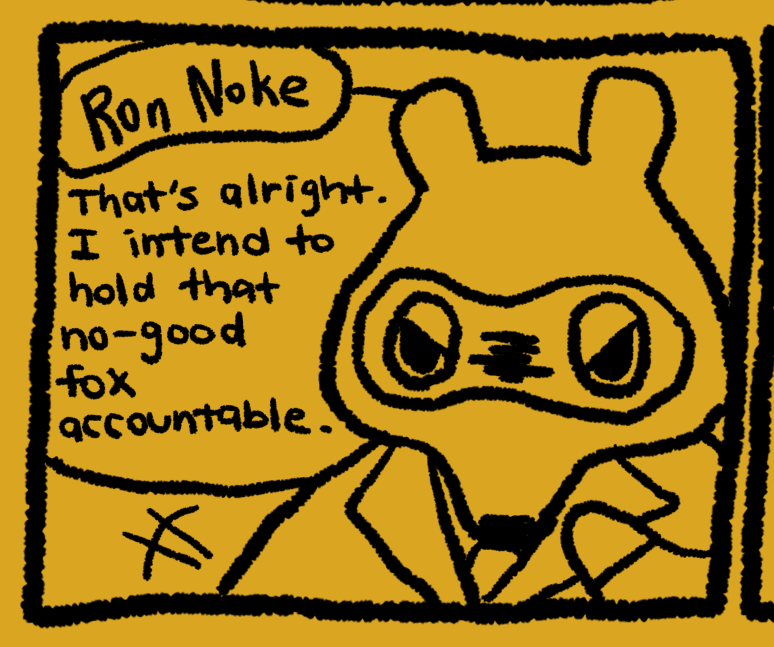
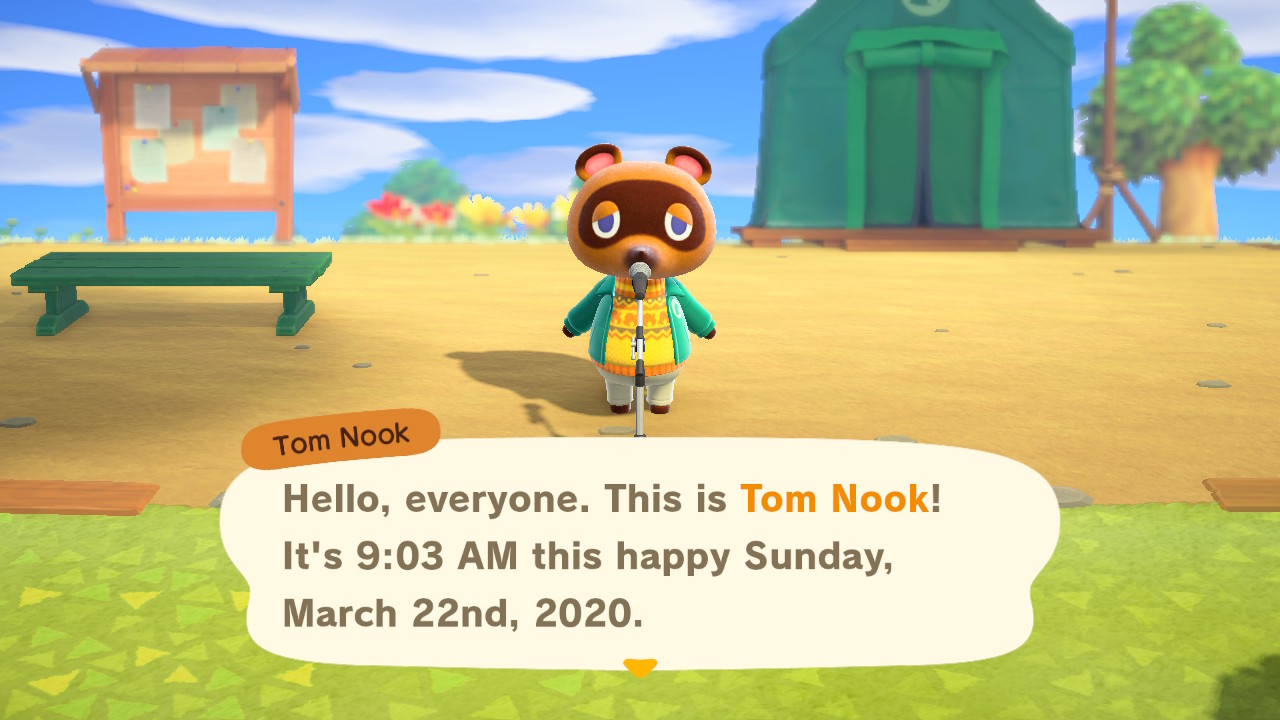
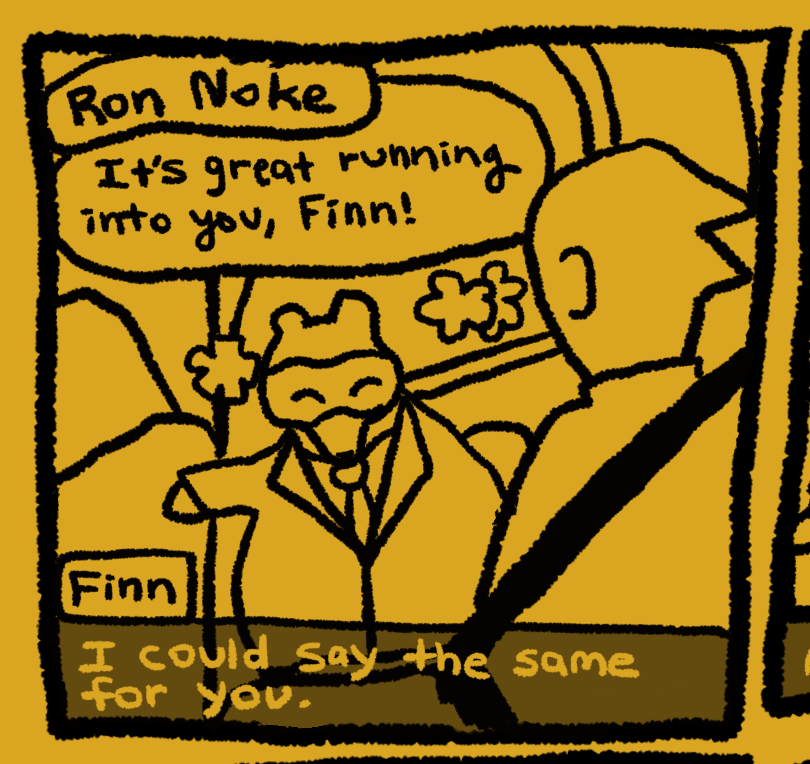
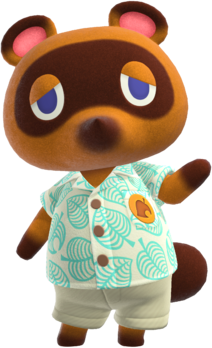
Ron Noke is inspired by Animal Crossing's Tom Nook, and personality-wise, the similarities are hard to miss. A businessman through and through, Ron is savvy, persistent, and oddly generous when it suits him. Often misunderstood and perpetually side-eyed, he walks the fine line between capitalist menace and surprisingly supportive entrepreneur.
finn lex
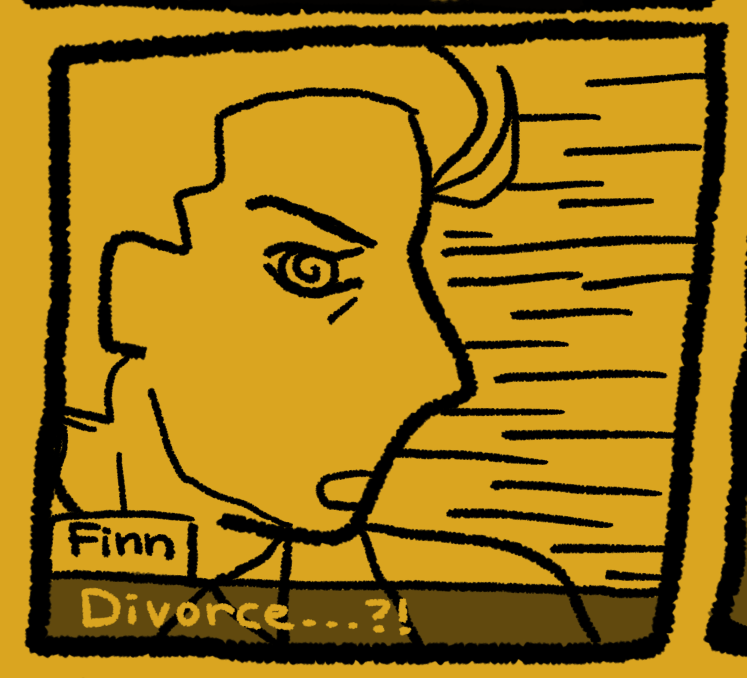
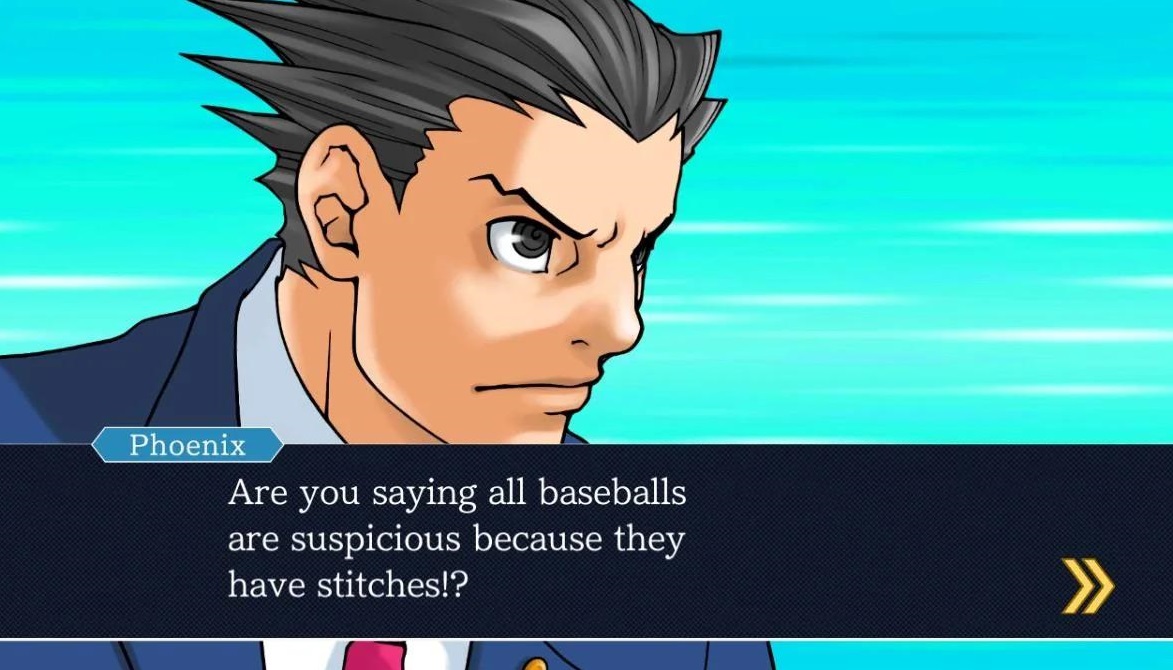
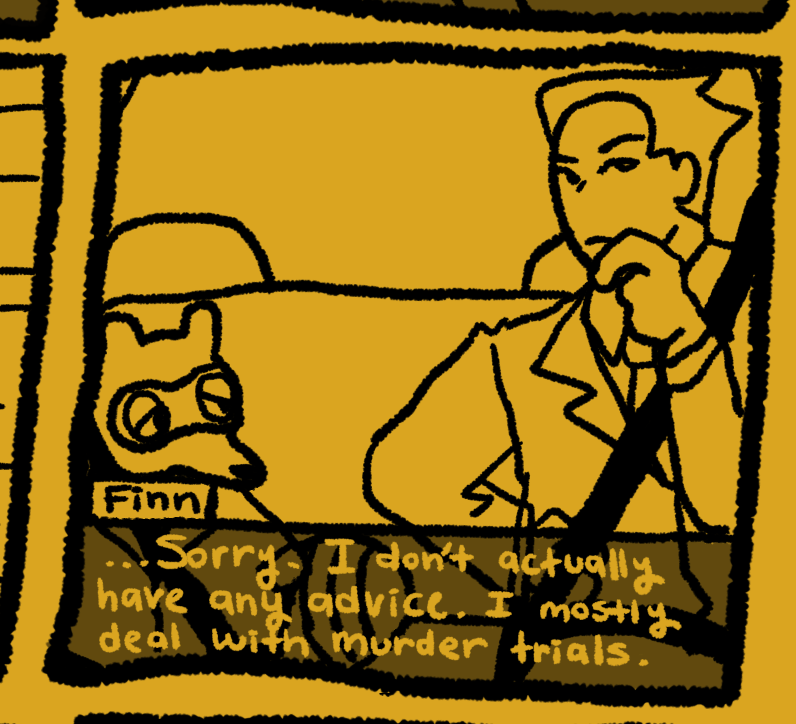
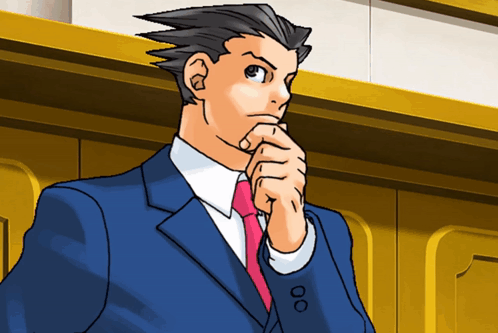
A Japanifornia native, Finn Lex is a defense attorney who genuinely believes in the good of everyone, trusting his clients through and through. He's based on Phoenix Wright from Ace Attorney, carrying over that same relentless optimism, dramatic flair, and unwavering belief in uncovering the truth in every situation.
allan
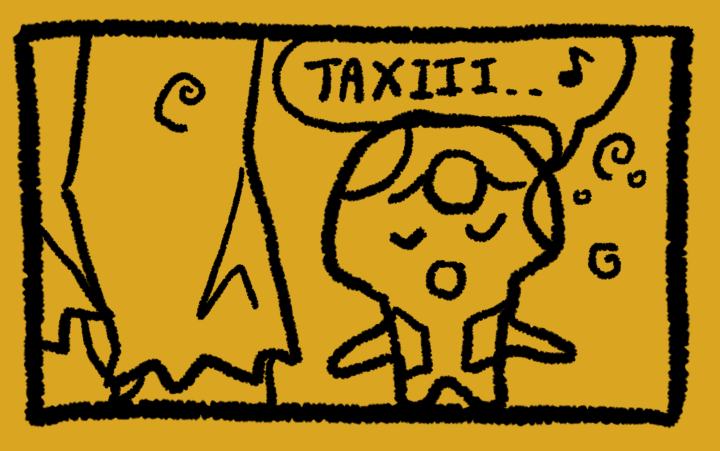
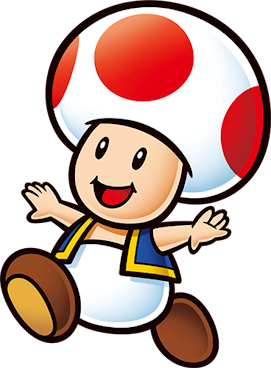
Allan is a sentient mushroom inspired by Mario's Toad. Outgoing and endlessly enthusiastic, Allan loves to sing, drawing direct inspiration from the many fan-made Toad vocal covers over the years. Shrill? Absolutely. Piercing? Without question. But always performed with unmatched passion.
ryo
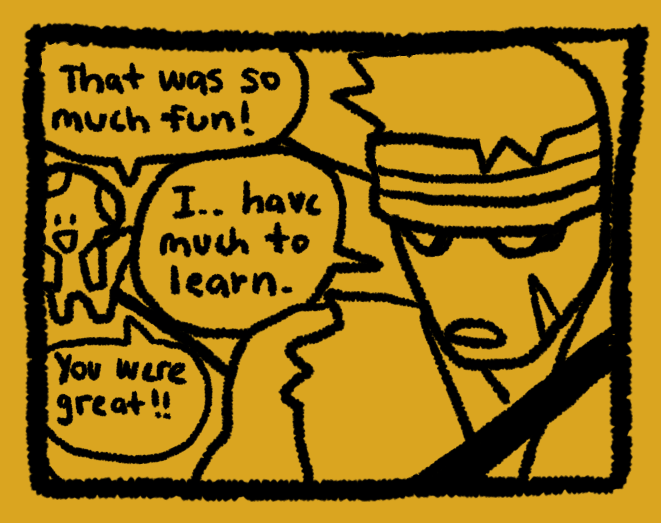
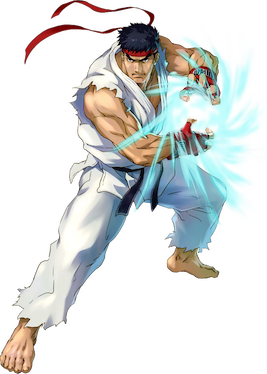
Ryo is based on Ryu from Street Fighter. Sorry, to be honest, I don't know everything about him. What I do know is the role/trope he fills: the endlessly determined martial artist, forever training, forever wandering, and forever seeking self-improvement through combat. He's disciplined, serious, and seems far more interested in the fight itself than in winning. One fun reference I thought of while deciding to add him to Crazy Cabbie was Rumble McSkirmish from Gravity Falls, a parody that captures a bit of Ryu's iconic presence in a playful way.
young royal
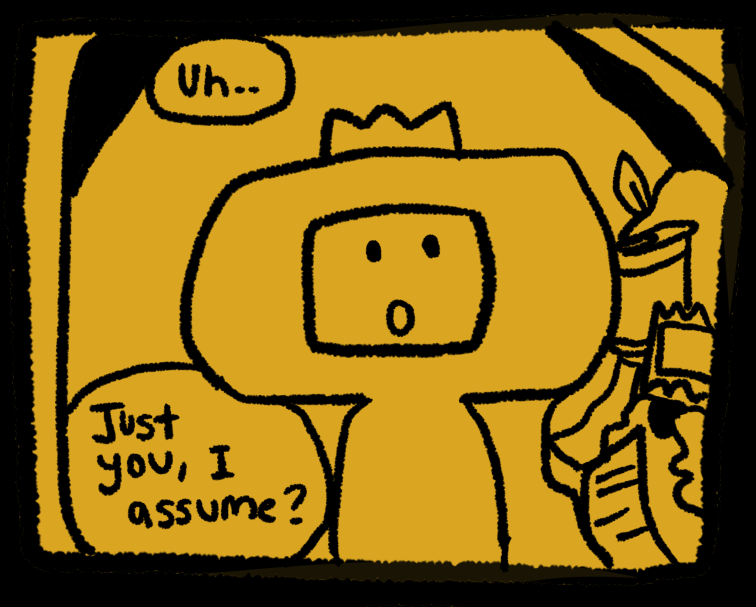
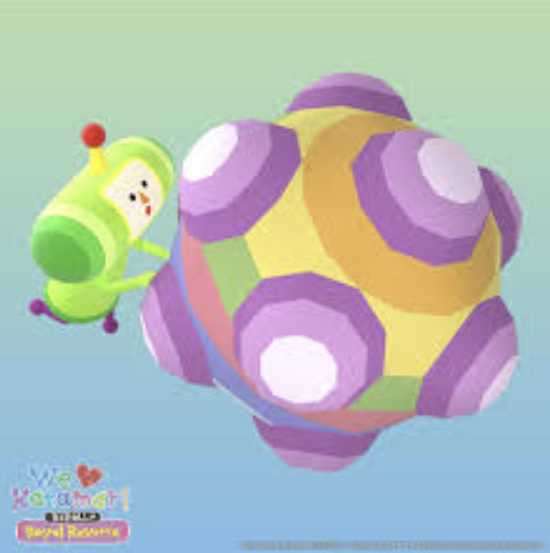
The Young Royal is inspired by the Prince of All Cosmos from Katamari Damacy.
Tasked with rolling objects into his heirloom Katamari, he does so with
little regard for scale, safety, or consequence. Over time, this has led to an
unsettling reputation: rumors of people being picked up and never quite returned.
Despite the urban myths and quiet menace, the Young Royal himself is surprisingly
sweet, earnest, and blissfully unaware of the chaos he leaves behind.
episode dives
episode 13 dive: what's that song?
Wondering what that song Otto ended up singing along to on the radio was? Wonder no more... I Can't Drive 55 by Sammy Hagar, written in response to the introduction of the national speed limit. It's a great song for crazy cabbies such as Otto to drive to late at night. After all, by law, Crazy Cabbies are subject to... different restrictions. Of course, that's assuming you actually have the license to drive as one.
episode 8 dive: the divorce
It's real... In canon (aka Animal Crossing), Tom Nook and Crazy Redd's
partnership was profitable and mutually beneficial, but ultimately short-lived
following Redd's betrayal. That said, fans love to jokingly spin that partnership
into something more, which makes their "divorce" (or rather, the end of their
business relationship) feel far more dramatic than it probably ever was. It doesn't
help that the way they talk about one another afterward in-game makes them
sound like bitter exes who absolutely do not want to work together again.
The falling-out even mirrors Japanese folklore, echoing the rivalry between the
tanuki and the kitsune, two trickster figures locked in an eternal feud. The
parallels are subtle, but fun to notice.
On a separate note, something I experimented with in this episode was referencing
dialogue style. Ron and Finn's format of speech mimic the designs from their
respective franchises. Completely unnecessary, slightly silly, but very intentional.